
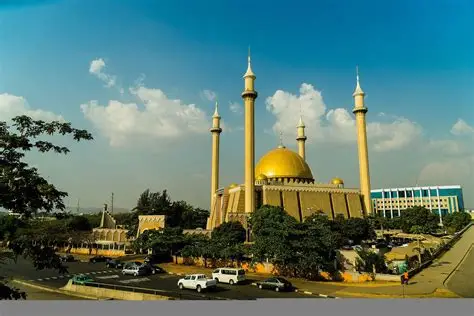

Departments and Agencies (MDAs) of the Federal Government have allocated almost ₦400 billion in the 2026 budget for the construction and renovation of community halls, mosques, traditional rulers’ palaces, village market squares and civic centres, according to findings by The PUNCH.
A significant portion of the allocation is also earmarked for projects considered non-developmental, including the supply of grains, motorcycles and tricycles, sponsorship of community thrift societies, and the construction of museums and mini-stadia.
Among the agencies with such budget provisions are the Defence Headquarters, the Nigerian Air Force, the Nigerian Defence Academy, the Federal Ministry of Information and National Orientation, the Federal Ministry of Industry, Trade and Investment, the National Building and Road Research Institute (NBRRI), the National Productivity Centre, the Industrial Training Fund and several others.
The spending plan has sparked criticism from policy experts, who argue that the projects do not align with Nigeria’s most pressing developmental needs. They contend that resources should instead be directed toward healthcare, education, security, power supply, roads and other critical infrastructure capable of delivering wider economic and social benefits.
Analysts also raised concerns over the inclusion of projects that appear unrelated to the statutory responsibilities of some government agencies.
For instance, the National Building and Road Research Institute is expected to fund the construction of village halls in Anambra, an international market in Jigawa, traditional rulers’ palaces in Rivers and Kogi states, market stalls in Borno, a multipurpose hall in Kaduna and the renovation of five mosques across Kebbi, Ekiti and Jigawa states.
The combined value of these projects exceeds ₦4 billion. Similarly, the National Productivity Centre’s budget includes support for Ijaw musicians, the construction of an Emir’s palace in Yobe State, an econometrics laboratory in Ekiti State, the renovation of Obas’ palaces in Ogun State and the construction of an abattoir in Gombe State.
The National Mathematical Centre also budgeted for the construction of a Sociology Department building at Ahmadu Bello University, Zaria, a project many observers say falls outside the institution’s core mandate.
Commenting on the development, economist and former central banker Chukwunonso Ihuma blamed the National Assembly for what he described as weak oversight and the insertion of projects that add little value to national development.
According to him, lawmakers often increase budget proposals submitted by MDAs and include projects that have limited impact on citizens. He advocated a return to zero-based budgeting, where every expenditure must be justified before approval.
Ihuma also argued that projects such as markets, community halls and traditional rulers’ palaces should ordinarily be handled by state and local governments rather than federal agencies.
President Bola Tinubu signed the ₦68.32 trillion 2026 Appropriation Bill into law in April and also approved an extension of the 2025 budget implementation period. In July, the Senate further extended the implementation of the capital component of the 2025 budget until September 30, 2026, to prevent project abandonment.
The Nigerian Institute of Social and Economic Research (NISER) stated that successful implementation of the budget would require stronger fiscal coordination, improved revenue generation and structural reforms to address inflation, exchange rate volatility and governance challenges.
Chief Executive Officer of the Centre for the Promotion of Private Enterprise, Dr. Muda Yusuf, said the government’s finances have come under greater pressure following the discontinuation of the Ways and Means financing arrangement. He urged authorities to focus on strengthening revenue mobilisation and improving budget realism.
Analysts also questioned some of the assumptions underlying the 2026 budget, noting that projected revenue of ₦36.87 trillion leaves a substantial financing gap to be covered through borrowing. They warned that unrealistic projections and spending priorities could undermine effective budget implementation and public confidence in government finances.
Media strategist and former presidential adviser Umar Sani added that some administrations had previously rejected budgets containing questionable items, stressing the need for stricter scrutiny of public expenditure to ensure national resources are directed toward projects with greater developmental impact.