
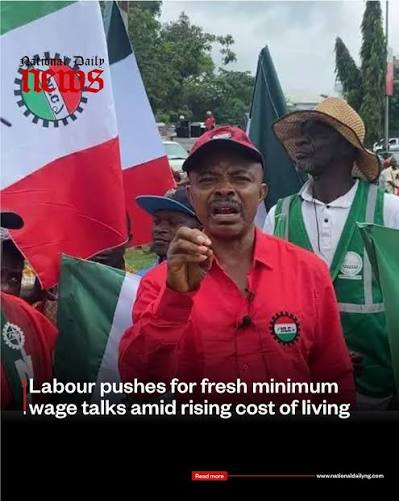

Fresh discussions on Nigeria’s minimum wage are gathering momentum as government officials and labour leaders acknowledge that the current ₦70,000 minimum wage may no longer reflect the country’s rising cost of living.
The renewed debate comes amid persistent inflation, increasing transport fares, rising house rents and higher food prices, which have continued to erode workers’ purchasing power despite last year’s wage adjustment.
Stakeholders argue that the conversation should extend beyond salary increases to addressing the underlying economic challenges affecting household incomes.
Many Nigerians have questioned whether raising wages alone can significantly improve living standards if the cost of essential goods and services continues to outpace income growth.
Labour unions are expected to engage the government in further negotiations, while economists have called for a balanced approach that combines wage reviews with policies aimed at controlling inflation, boosting productivity and reducing the cost of living.
The discussions are expected to shape future decisions on workers’ welfare and broader economic reforms.