

Vice President Kashim Shettima has launched the Niger Delta Agriculture Fund, a $500 million investment vehicle he described as a major step toward strengthening food security and diversifying Nigeria’s economy through agriculture.
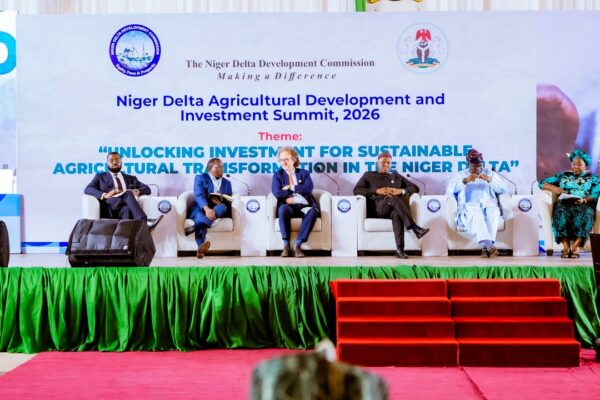
Shettima spoke on Wednesday at the Niger Delta Agricultural Development and Investment Summit in Abuja. The Office of the Vice President and the Niger Delta Development Commission (NDDC) jointly organised the event. Shettima said President Bola Tinubu had placed food security among the administration’s top priorities since taking office in 2023.
Why Shettima Says Food Security Matters
“Nations that lose control of their food eventually surrender control of their future,” Shettima said. He added that Tinubu’s declaration of a state of emergency on food security in July 2023 shifted the country’s focus toward increasing production, stabilising markets and improving food access.
How the Niger Delta Agriculture Fund Will Work
The Vice President said the new fund would operate as a commercial, returns-driven investment vehicle. It will cover aquaculture, palm oil, cassava, cocoa, rice, horticulture, marine resources and livestock across the Niger Delta.
“The Niger Delta Agricultural Investment Fund of 500 million dollars, which we launch today, is a commercial, returns-driven vehicle spanning the value chain,” he said. He added that it would coordinate support from development partners, including the World Bank, African Development Bank, Islamic Development Bank and private financiers.
Shettima, who will chair the newly established Niger Delta Agricultural Development and Investment Council, praised the oil-rich region for investing in agriculture rather than relying solely on crude oil revenues. “The Niger Delta has instead chosen to return to an identity older than crude itself,” he said. “It has chosen to transform this region, feed the nation, and attract the world.”
From Cash Crops to Crude: A Brief History
Reflecting on Nigeria’s agricultural history, Shettima noted that before the discovery of oil, exports such as groundnuts, cocoa and palm produce financed schools, hospitals and other national institutions. He lamented that the oil boom later encouraged dependence on food imports instead of local production.
He also highlighted several Federal Government agricultural initiatives, including the Renewed Hope Agricultural Mechanisation Programme, which aims to deploy 10,000 tractors over five years, alongside the John Deere Tractorisation Programme, the Greener Hope Project and the Green Imperative Programme. According to Shettima, these interventions have already contributed to significant reductions in the prices of some staple food items.
Officials Call for Greater Collaboration
Minister of Regional Development Abubakar Momoh described agriculture as central to the Tinubu administration’s economic transformation agenda. He urged greater collaboration between government, the private sector and development partners to unlock the Niger Delta’s agricultural potential.
NDDC Managing Director Samuel Ogbuku said the summit marked the beginning of a long-term partnership to mobilise investments, create jobs, strengthen food security and drive economic growth across the region.
Chairman of the NDDC Governing Board, Chiedu Ebie, said the Niger Delta deserved a future built on productivity, enterprise and shared prosperity. He called for greater support for farmers through improved access to finance, technology, infrastructure and markets.