
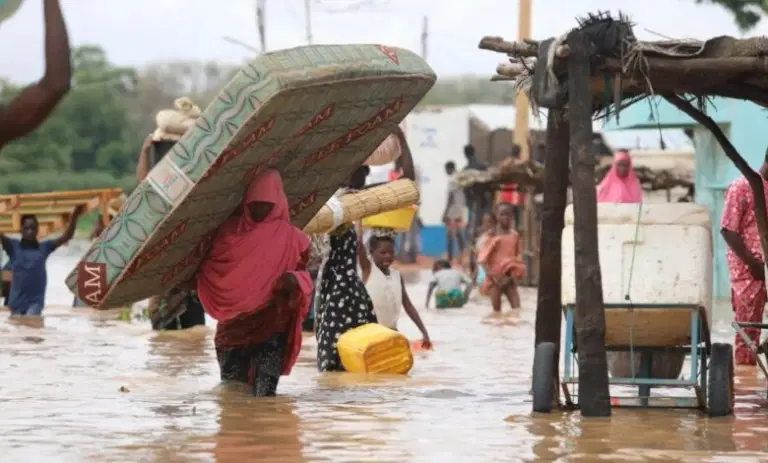

The Nigeria Hydrological Services Agency (NIHSA) has issued a flood advisory warning that 17 states could experience moderate flooding between July 21 and July 27, 2026, urging residents and authorities to take preventive measures.
According to NIHSA’s latest National Flood Advisory (Alert No. NFA-2026-200), rising water levels in several rivers have increased the likelihood of localized flooding, particularly in communities located along riverbanks and floodplains.
The agency’s Director General and Chief Executive Officer, Arc. Umar Mohammed, said monitoring stations across the country recorded water levels above safety thresholds, raising concerns over possible flooding in vulnerable areas.
Among the states identified are Bauchi, Edo, Imo, Kaduna, Plateau, and Benue, alongside 11 other states facing similar flood risks. NIHSA disclosed that 16 critical hydrological monitoring stations are currently under close observation, including stations on the Karam River, Waya River, and Amber River, where river levels have continued to rise.
The agency also highlighted the potential impact in some states:Bauchi: 1,841 communities, 145 schools, 101 health facilities and eight markets could be affected.Edo: 148 communities, 131 schools, 123 health facilities, four markets and seven religious centres are at risk.Imo: 415 communities, 423 schools, 198 health facilities, 49 markets and 111 religious centres may experience flooding.Kaduna: 168 communities, 16 schools and three health facilities are listed as vulnerable.Plateau: 205 communities, 137 schools, 44 health facilities and 16 markets could be impacted.Benue: Five communities, eight schools and two health facilities are among the exposed locations.
To reduce the impact of the expected flooding, NIHSA advised emergency agencies, state governments and local authorities to begin immediate preparedness efforts.
The agency recommended evacuating residents from flood-prone communities, positioning emergency supplies in safe locations, clearing blocked drainage systems and strengthening community early-warning systems. Residents were also warned to avoid walking, driving or riding through flooded roads or fast-moving water and to stay updated with daily flood advisories issued by NIHSA.